 Save to Pinterest
 I discovered this bowl on a sweltering afternoon when my kitchen felt too hot to turn on the stove. My neighbor mentioned she'd been living off cold noodle bowls all summer, and something about the simplicity of it stuck with me. The next day, I raided my pantry and found tahini, sesame oil, and some ginger in the crisper, and suddenly I had this vibrant, cooling meal that tasted nothing like desperation. It became my go-to when the weather turned oppressive and I still wanted something that felt intentional and nourishing.
I made this for a small dinner party on a June evening when everyone wanted something cold but nobody wanted salad. I remember how the conversation just flowed easier when we weren't sitting heavy after a meal, and my friend kept asking for the dressing recipe, convinced there was some secret ingredient she was missing. There wasn't, just good tahini and real ginger, but there was something about watching people relax into a bowl of noodles that made the whole evening feel successful.
Ingredients
- Soba or rice noodles (300 g): Soba has an earthy nuttiness that pairs beautifully with sesame, but rice noodles work equally well if you need gluten-free; just don't skip the cold water rinse or they'll clump together stubbornly.
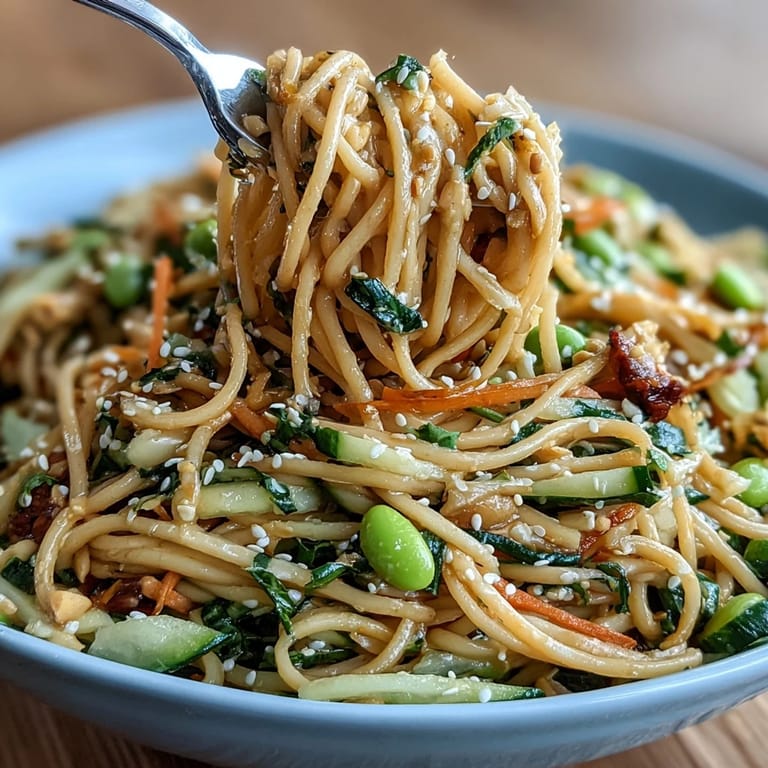
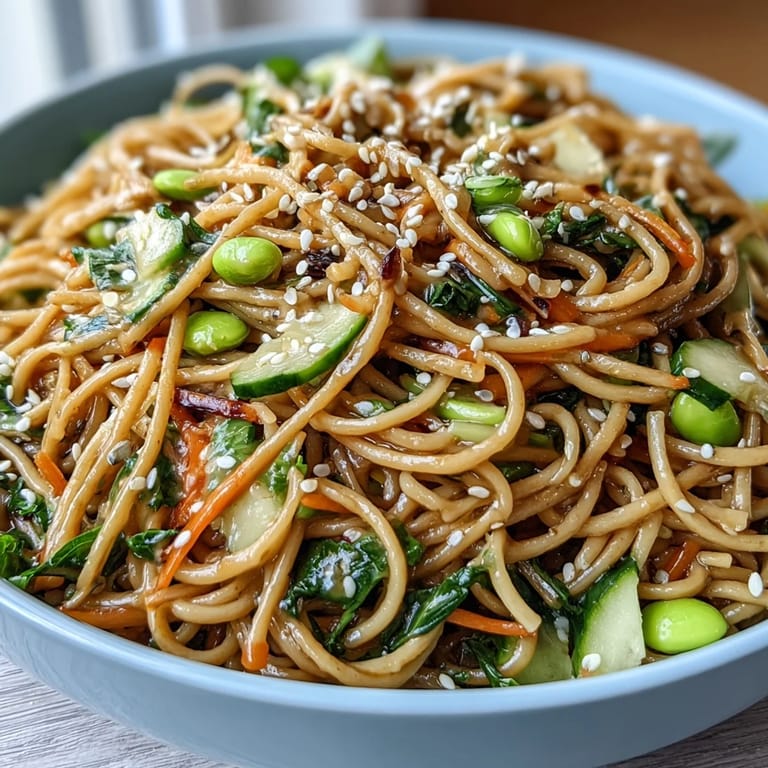
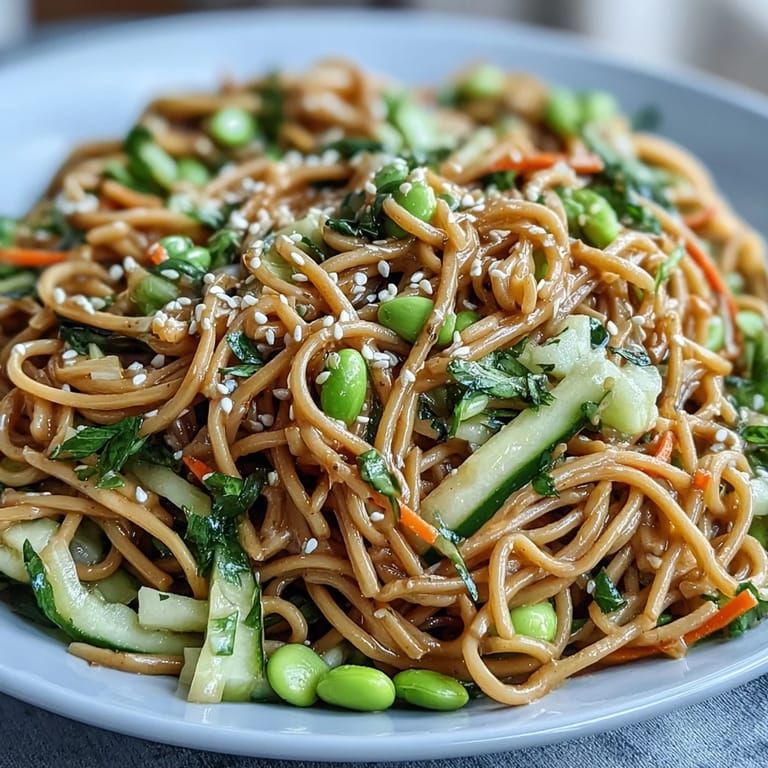
- Cucumber and carrots: The julienne really matters here because thin strands hold the dressing better than chunks and actually feel delicate on your palate.
- Edamame (1 cup shelled): Cook these until just tender, then let them cool completely so they don't wilt everything else in the bowl.
- Green onions: These should be your final garnish, added just before eating so they keep their sharp bite.
- Tahini or peanut butter (3 tbsp): This is your dressing base, so use the best quality you can find; cheap tahini can taste chalky and bitter.
- Toasted sesame oil (2 tbsp): This is nonnegotiable and must be toasted sesame, not plain; it's the soul of the whole thing.
- Soy sauce (2 tbsp): Use tamari if you're avoiding gluten, and honestly, a good quality soy sauce makes an enormous difference.
- Rice vinegar (1 tbsp): This keeps everything bright and prevents the dressing from feeling heavy.
- Fresh ginger and garlic: Never use powdered here; fresh ginger has a clean heat that powdered can't replicate, and you'll taste the difference immediately.
- Maple syrup or honey (1 tbsp): Just enough to round out the flavors without making this a dessert.
- Toasted sesame seeds: Toast these yourself if you can; the aroma of toasting sesame seeds filling your kitchen is honestly worth the two extra minutes.
Tired of Takeout? 🥡
Get 10 meals you can make faster than delivery arrives. Seriously.
One email. No spam. Unsubscribe anytime.
Instructions
- Cook the noodles with intention:
- Follow the package directions but taste them a minute early; you want them tender but with just a whisper of resistance when you bite. Drain and immediately rinse under the coldest water your tap can produce, swirling them gently so they don't stick together in clumps.
- Prepare your vegetables strategically:
- Julienne the cucumber and carrots as thinly as you can without losing patience, then set them aside at room temperature so they stay crisp. If you're using frozen edamame, cook them just until heated through, then spread on a plate to cool.
- Build the dressing like you're whisking a secret:
- Combine the tahini, soy sauce, sesame oil, rice vinegar, maple syrup, ginger, and garlic in a small bowl and whisk steadily until it's absolutely smooth and homogeneous. Start with 2 tablespoons of water and add more slowly; the dressing should pour easily but still coat a spoon.
- Toss with confidence:
- Put the cooled noodles in a large bowl and pour the dressing over them, then toss with two utensils or your hands until every strand is glossy and coated evenly. This takes about a minute and makes a real difference in how the flavors distribute.
- Compose the bowl:
- Add the cucumber, carrots, and edamame and toss gently so you don't break anything, then divide among bowls. Finish with a scatter of green onions and a generous sprinkle of toasted sesame seeds right before serving.
 Save to Pinterest
 This bowl became my antidote to afternoon exhaustion, something I could eat at my desk without making a mess, that tasted sophisticated but required almost no skill. It taught me that cold food doesn't mean sad or lazy; it just means thoughtful and responsive to what your body actually needs.
The Dressing as Your Foundation
The dressing is what transforms this from a plate of vegetables into something genuinely craveable. I learned this when I tried a version with a thin vinaigrette and it was just sad; the tahini base creates this silky coating that feels luxurious and keeps the noodles from drying out. The key is whisking long enough that the tahini fully incorporates with the other ingredients instead of floating in little specks. If you taste it and it seems too intense, remember it'll mellow slightly once it coats all the noodles, so resist the urge to dilute it too much.
Making This Your Own
This recipe is forgiving enough to adapt but structured enough that you won't accidentally ruin it. I've made it with rotisserie chicken shredded on top, with crispy baked tofu, with shrimp that I quickly seared in a hot pan. The vegetables can shift with the season: in summer I use the cucumbers and fresh corn, in cooler months I've added shredded cabbage and roasted Brussels sprouts that got sliced thin. The dressing stays constant because that's what holds everything together, but the supporting vegetables are really just a starting point.
Storage and Make-Ahead Wisdom
This is one of those rare dishes that actually tastes better if you let it sit for a few hours, which makes it ideal for packing lunch or planning ahead. Keep the noodles and dressing together but store the raw vegetables separately so they don't get soggy, then combine everything about 15 minutes before you want to eat. If you're meal prepping for the week, cook the noodles and make the dressing on Sunday, then toss everything together fresh each day or combine it all and just accept that it'll be slightly softer.
- Leftover dressing keeps for a week in the fridge and works brilliantly on grain bowls or roasted vegetables.
- The noodles absorb the dressing more if they sit overnight, which some people love and others find too intensely flavored, so taste and adjust water as needed.
- Toast your sesame seeds the day of if possible, since they lose their magic quickly once they cool down.
 Save to Pinterest
 There's something deeply satisfying about a bowl this beautiful and nourishing that takes almost no skill to execute. Make it when you need something light, or when you need to prove to yourself that good food doesn't require complexity or hours at the stove.
Common Recipe Questions
- → Can I make this bowl ahead of time?
Yes, you can prepare the vegetables and dressing up to 2 days in advance. Store them separately in the refrigerator. Toss everything together just before serving to maintain the best texture.
- → What type of noodles work best?
Soba noodles or rice noodles both work beautifully. Soba offers a nutty flavor and hearty texture, while rice noodles are lighter and more delicate. Whole wheat spaghetti makes a great substitute too.
- → Is this dish served hot or cold?
This bowl is designed to be enjoyed chilled or at room temperature. The cold noodles paired with crisp vegetables make it especially refreshing during warmer months.
- → How can I add more protein?
Baked tofu, tempeh, shredded rotisserie chicken, or grilled shrimp all make excellent protein additions. Simply prepare your chosen protein separately and arrange it on top of the noodles.
- → Can I make it gluten-free?
Absolutely. Use rice noodles instead of soba, and replace soy sauce with tamari. Always check your tahini and other condiment labels to ensure they're certified gluten-free.