 Save to Pinterest
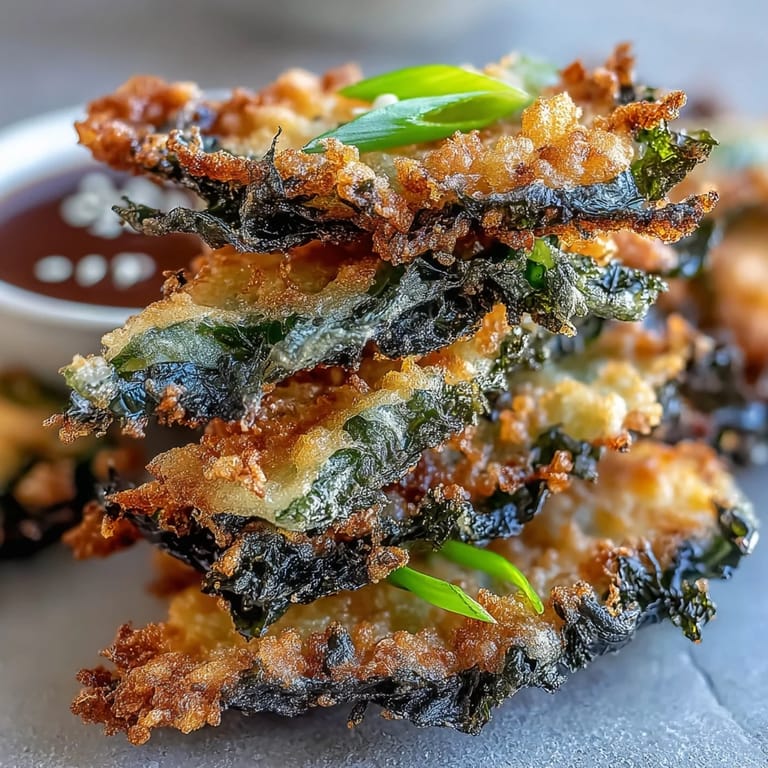
 The first time I encountered seaweed tempura was at a tiny izakaya in Tokyo, where the bartender pressed a warm, crisp basket of golden nori pieces into my hands alongside a cold beer. I was skeptical—fried seaweed sounded like something that would turn soggy within seconds—but the shattering crunch and ocean-sweet flavor completely won me over. Now whenever I make these at home, that memory of golden paper lantern light and the sound of sizzling oil comes rushing back.
Last summer, I made a massive batch for a backyard gathering, and my friend Sarah—who claims to despise seaweed in any form—kept reaching for piece after piece. By the time I turned around from the kitchen counter, the entire platter had vanished, and she was sheepishly licking sesame seeds off her fingers. Something about transforming that familiar, paper-thin nori into something golden and substantial makes people forget their preconceptions entirely.
Ingredients
- 8 large nori sheets: Cut these into quarters before you start—32 bite-sized pieces fry more evenly and are easier to dip than whole sheets
- 100 g all-purpose flour: This creates the structure of your batter, while keeping things light enough to not overwhelm the delicate seaweed
- 30 g cornstarch: The secret weapon for extra crispness that holds up longer than flour alone
- 1/2 tsp baking powder: Just enough lift to create those tiny bubbles in the batter that make tempura so airy
- 1/2 tsp fine sea salt: Enhances the natural umami of the nori without competing with it
- 200 ml ice-cold sparkling water: The carbonation creates bubbles, and keeping it ice-cold prevents gluten development—both crucial for that signature tempura lightness
- 1 large egg yolk, chilled: Adds richness and helps the batter cling to the slippery nori surface
- 500 ml neutral oil: Canola or sunflower oil has a high smoke point and neutral flavor that lets the seaweed shine
- 3 tbsp soy sauce: The foundation of your dipping sauce, bringing deep salty notes
- 2 tbsp mirin: Adds subtle sweetness and a beautiful glossy finish to the sauce
- 1 tbsp rice vinegar: Cuts through the richness of the fried coating with bright acidity
- 1 tsp sugar: Just enough to balance the salty elements and round out the dipping sauce
- 1/2 tsp toasted sesame oil: A little goes a long way—this brings nutty warmth that lingers
- 1 spring onion: Fresh bite and pop of green against all that golden crunch
- 1/2 tsp sesame seeds: Optional but lovely—they add one more layer of texture and nutty flavor
Tired of Takeout? 🥡
Get 10 meals you can make faster than delivery arrives. Seriously.
One email. No spam. Unsubscribe anytime.
Instructions
- Whisk up your dipping sauce first:
- In a small bowl, combine soy sauce, mirin, rice vinegar, sugar, and sesame oil, stirring until the sugar completely dissolves. Add the sliced spring onion and sesame seeds, then set it aside to let the flavors meld while you work on everything else.
- Prep the nori:
- Stack all 8 nori sheets and use kitchen scissors or a sharp knife to cut each sheet into quarters, giving you 32 bite-sized pieces that will fry evenly and be the perfect size for snacking.
- Mix the dry ingredients:
- In a mixing bowl, whisk together flour, cornstarch, baking powder, and salt until thoroughly combined—this ensures your tempura batter fries up uniformly light and crisp.
- Make the batter:
- Lightly beat the chilled egg yolk in a separate bowl, then stir in the ice-cold sparkling water. Pour this into your flour mixture and gently fold with chopsticks or a fork, leaving it slightly lumpy—the key is not to overmix, which would make the tempura tough instead of tender.
- Heat your oil:
- Pour the neutral oil into a deep, heavy-bottomed pan and heat it to 180°C (350°F). If you do not have a thermometer, the oil is ready when a small drop of batter sizzles immediately and rises to the surface.
- Fry the seaweed:
- Dip each nori piece quickly into the batter, letting excess drip off, then immediately slide it into the hot oil. Fry in small batches to avoid crowding, about 30 to 45 seconds per piece, until they are crisp and lightly golden.
- Drain and serve:
- Lift each piece out with a slotted spoon and let drain on paper towels for just a moment before transferring to a serving platter. Serve immediately while they are still warm and shatteringly crisp, alongside that dipping sauce you made earlier.
 Save to Pinterest
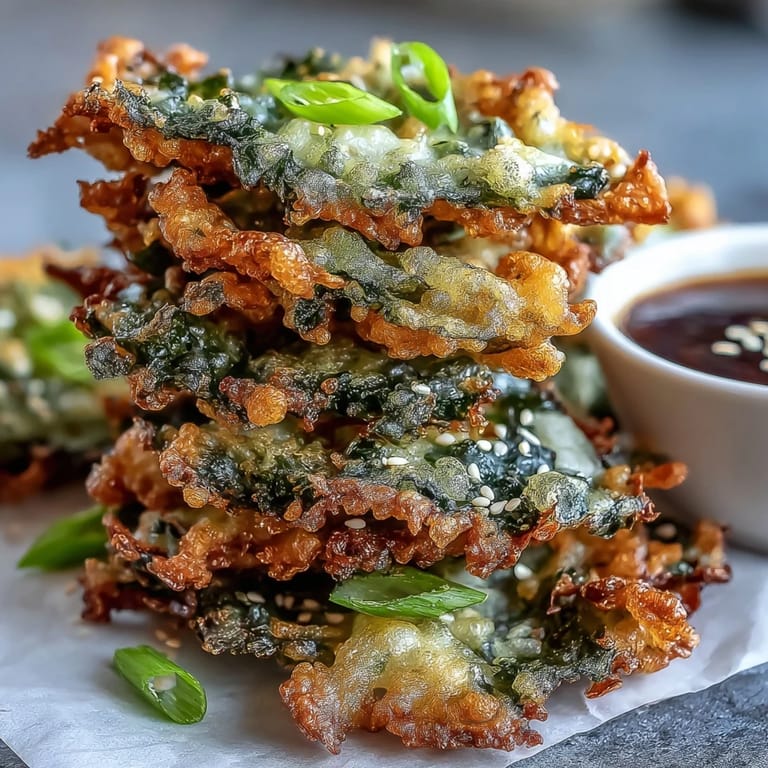
 There is something deeply satisfying about watching these delicate, dark green sheets emerge from hot oil transformed into golden, delicate crisps. My roommate now asks for them whenever we have people over, and they have become the one appetizer that disappears before I can even get them onto a proper serving plate.
Getting The Perfect Fry
The oil temperature is everything—if it is too low, the seaweed absorbs oil and becomes greasy, but too hot and the batter burns before the nori inside heats through. I keep a close eye on the first batch as my temperature guide, adjusting the heat as needed for the remaining pieces.
Making It Your Own
While classic seaweed tempura is beautiful on its own, I have found that a pinch of chili flakes in the batter adds a gentle heat that pairs wonderfully with the salty dipping sauce. You could also experiment with furikake seasoning mixed into the flour blend for extra umami depth.
Serving Suggestions
These shine alongside cold Japanese beer or a pot of sencha green tea, but they also work beautifully as part of a larger spread with other tempura vegetables. For a dinner party, I often double the recipe and serve them alongside lighter fare like cucumber salad or miso soup.
- Transfer to a wire rack instead of paper towels if frying in large batches—this keeps them crisp longer
- Double-coat by dipping each piece twice for an extra-thick, restaurant-style crunch
- Make extra dipping sauce—people always seem to want more than you expect
 Save to Pinterest
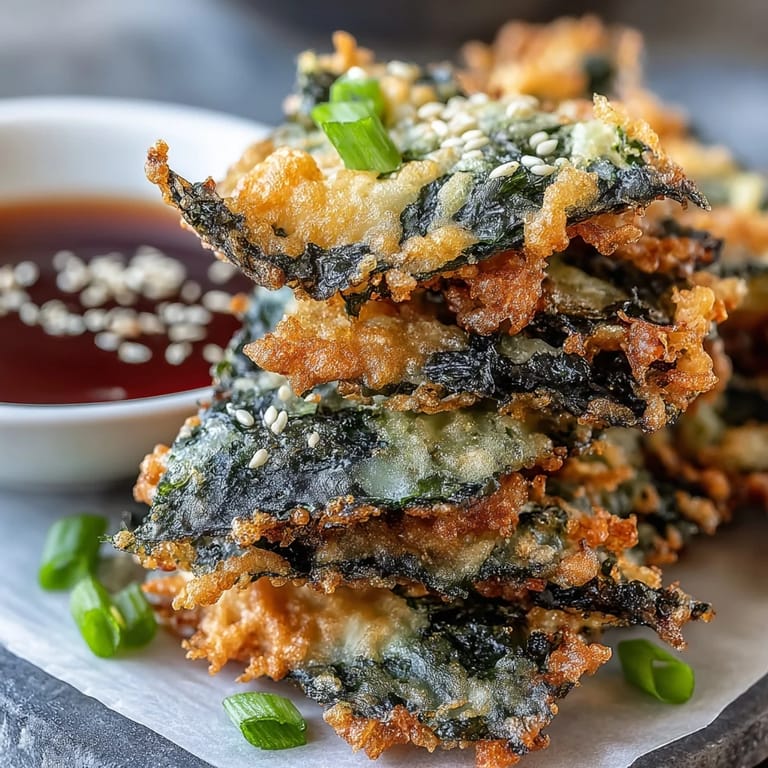
 There is pure joy in biting into something so simple yet so perfectly transformed—maybe that is why these always make people smile, whether they are seaweed lovers or converts.
Common Recipe Questions
- → What type of seaweed works best for tempura?
Large nori sheets are ideal for tempura because they hold up well during frying. Their sturdy texture prevents tearing when dipped in batter, and they become wonderfully crisp. Other edible seaweeds like wakame or hijiki can be used, though nori provides the most authentic Japanese flavor and texture.
- → Why use sparkling water in the tempura batter?
The carbonation in sparkling water creates tiny bubbles in the batter, resulting in a lighter, crispier coating. Combined with keeping everything ice-cold, this prevents gluten development and ensures the tempura remains delicate rather than doughy or heavy.
- → How do I know when the oil is at the right temperature?
Use a kitchen thermometer to maintain 180°C (350°F). Without one, test by dropping a small amount of batter into the oil—it should sink slightly then rise immediately and bubble actively. The oil should shimmer but not smoke. Proper temperature ensures crisp results without greasiness.
- → Can I make the dipping sauce ahead of time?
Absolutely. The dipping sauce actually benefits from sitting for 15-30 minutes before serving, allowing the flavors to meld. Store it in the refrigerator and bring to room temperature before serving. The sauce keeps for up to a week when refrigerated.
- → What's the secret to keeping tempura crispy?
Keep your batter ice-cold and don't overmix—lumps are good. Fry in small batches to avoid dropping the oil temperature. Drain immediately on paper towels and serve warm. Avoid covering the tempura, as trapped steam makes it soggy. For extra crunch, consider double-coating the nori pieces.